


Understanding Plinko Board Physics: The Mechanics Behind the Game
Plinko has become a popular game in both physical and online casino environments, captivating players with its simple yet thrilling mechanics. A blend of chance and strategy makes Plinko an intriguing game to analyze through the lens of physics. As players drop their chips from the top of the board, they are often unaware of the intricate physics that govern the path their chip will take. In this article, we will delve into the physics of Plinko boards for online play, examining how gravity, momentum, and collision interactions impact the outcome of the game. For a hands-on experience, you can explore Plinko Board Physics For Online Gaming plinko-casino-game.co.nz, which offers a detailed representation of this captivating game.
The Basics of Plinko
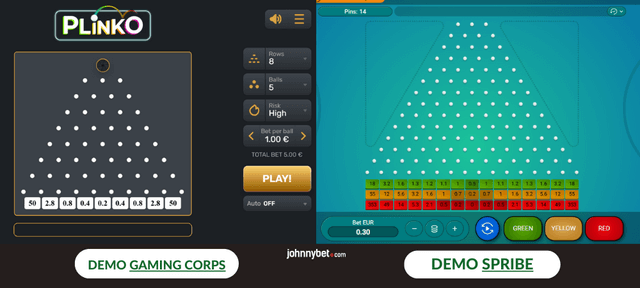
At its core, a Plinko board is a vertical board with a series of pegs arranged in a staggered grid. Players drop a chip from the top, and as it falls, the chip interacts with the pegs, bouncing off them and eventually landing in one of several slots at the bottom of the board. Each slot typically carries a different payout, adding an element of strategy to the game. The movement of the chip can be analyzed through several key physical principles:
Gravity
The most obvious physical force at play in a Plinko game is gravity. The chips are subject to gravitational acceleration, which pulls them downward as soon as they are released. This constant downward force ensures that the chips never float or hover and provides a predictable influence on their motion. As the chip falls, its speed increases due to gravity until it strikes a peg or reaches the slots at the bottom.
Momentum
As the chips fall, they gain momentum. Momentum is defined as the product of an object’s mass and its velocity, and it plays a crucial role when chips collide with pegs. When a chip hits a peg, it transfers some of its momentum to the peg while altering its own direction of motion. This transfer can be described mathematically using the principles of conservation of momentum, which states that the total momentum before and after a collision must remain constant in a closed system.
The Role of Collision
In a typical Plinko board, when a chip approaches a peg, it can collide with it at varying angles. The angle of collision determines the resultant direction in which the chip will bounce off. If the chip strikes a peg directly, it might bounce straight down, but if it hits at an angle, it will recoil off at a corresponding angle. This property can lead to unpredictable outcomes, making players consider not only the trajectory of their drop but also the influence of angle on their final positions.
Understanding Probability and Strategy
While the physics aspects of Plinko are essential in understanding how the game works, probability also plays a crucial role in gameplay and strategy. Each peg the chip hits can change its course, introducing an element of randomness. However, players can still employ strategies to maximize their chances of landing in higher-paying slots.
Analyzing Different Outcomes
To better understand how to approach playing Plinko, it’s beneficial to analyze past outcomes and the distribution of where chips tend to land. Over many rounds, statistical trends can emerge. Players might notice that certain slots receive more chips than others, leading them to modify their dropping techniques accordingly. However, while strategies may increase odds of winning, the outcome will always be influenced by the inherent randomness instilled by the board’s design and the physics governing chip motion.
Effects of Online Simulation
Online Plinko games provide unique features that alter gameplay. In physical versions, players clearly see the chip’s path as it bounces, while digital platforms may simulate this using animations and random number generators (RNGs). The mechanics remain the same in principle, but it’s vital to understand that the visual representations may not fully capture the physical interactions taking place. Online gaming platforms often implement algorithms to ensure randomness and fairness, simulating the multitude of possible outcomes as closely as possible while keeping in mind the principles of physics.
Random Number Generators (RNG)
When playing Plinko online, RNG is vital for ensuring fair play. RNGs create unpredictable and random results that mimic the chance elements of physical systems. As such, the physics of Peano paths remain integral. An understanding of how these simulations work can enhance a player’s strategy by making them aware of how randomness is integrated into gameplay, ensuring that every chip’s path remains unpredictable.

Conclusion
Plinko combines elements of chance and strategy, making it an exciting game for players and an interesting subject for analysis. Understanding the physics behind the game allows players to appreciate the intricate dance of gravity, momentum, and collision at play with each drop of the chip. While randomness heavily influences outcomes, strategic considerations can still affect the final results.
By blending the principles of physics with gaming strategies, players can enhance their understanding and enjoyment of Plinko, whether in traditional or online formats. The mechanics behind the game highlight a beautiful intersection of entertainment and scientific principles, offering everyone—from casual players to dedicated strategists—an exciting experience with every drop.